Patio installation: when DIY makes sense and when to hire a pro
By Janice · Updated 2026-07-04
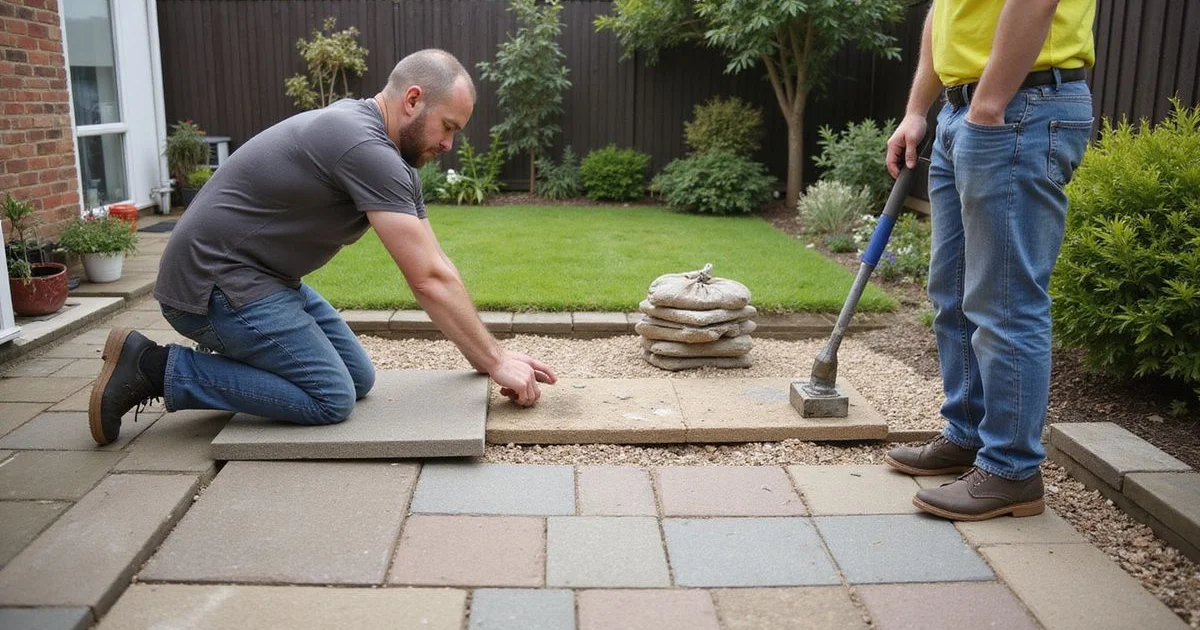
A patio looks like one of the more approachable DIY garden projects: buy some slabs, lay them out, done. In practice, the gap between “looks fine on day one” and “still looks fine in five years” comes down almost entirely to groundwork most people don’t realise matters until it’s already gone wrong.
Where DIY genuinely works
A small, level patio using simple square or rectangular concrete flags or reconstituted stone is a reasonable DIY project if you’re willing to do the groundwork properly rather than rush it. That means excavating to the right depth, compacting a proper sub-base (typically 75-100mm for a patio, since it only carries foot traffic rather than vehicle weight), and setting a consistent fall away from the house so rainwater has somewhere to go. If you’ve got the time, a rented plate compactor, and patience for a job that takes a weekend or two rather than an afternoon, this is achievable.
Simple rectangular layouts are also far more forgiving than anything involving curves, steps, or cutting slabs to fit around an awkward boundary. Straight lines and square corners are much easier to get right without professional experience.
Where it stops being a good idea
Sloped gardens, patios that tie into a building’s damp proof course, anything needing retaining walls or steps, and larger areas where a small levelling error compounds across the whole surface are all jobs where the margin for error shrinks fast. Getting the fall wrong on a small patio might mean a puddle in one corner. Getting it wrong on a larger, more complex site can mean water tracking toward the house instead of away from it, which risks damp problems that are far more expensive to fix than the patio itself.
| Job characteristic | DIY reasonable | Hire a professional |
|---|---|---|
| Size | Small (under 15 m²) | Larger areas |
| Ground | Level, easy to prepare | Sloped, needs excavation |
| Layout | Simple squares or rectangles | Curves, steps, cutting around features |
| Drainage | Straightforward fall to open ground | Ties into existing drainage or DPC height |
| Material | Concrete flags, simple slabs | Natural stone, porcelain, anything needing precise jointing |
The real cost of getting it wrong
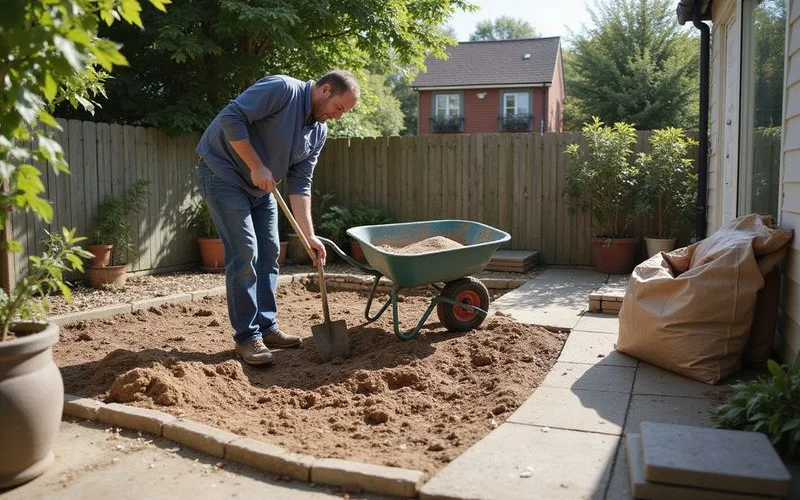
Reviewers across Cheltenham’s paving trade consistently point to the same failure pattern: patios that develop sinking slabs, cracked joints, or standing water within two to five years almost always trace back to inadequate base preparation rather than a poor choice of paving material. That pattern applies just as much to a DIY job as a professionally laid one, and a DIY mistake is often harder to fix because there’s no contractor guarantee to fall back on. If a self-laid patio needs redoing properly, you end up paying full price for excavation and rebuild, on top of whatever you spent doing it yourself the first time.
What DIY actually takes in time and equipment
Beyond the physical labour, a DIY patio needs some equipment most people don’t already own: a plate compactor for the sub-base (rentable by the day or weekend), a spirit level and string lines to keep courses straight, a bulk bag or two of sub-base stone and bedding sand, and a way to move and dispose of the soil you excavate. None of this is expensive to hire, but it adds a day of logistics before you even start laying slabs, and it’s worth costing in alongside the slabs themselves when you’re comparing DIY against a professional quote.
Time is the other factor people underestimate. A contractor with the right tools and a second pair of hands can often finish a small patio in two to three days. The same job done solo, around a day job and with breaks to figure out each stage as you go, commonly stretches to two or three weekends. That’s not a reason to rule DIY out, but it’s worth being honest with yourself about whether you’ll actually get it finished before the novelty wears off and it becomes an unfinished pile of slabs by the back door.
A middle ground
If you want to keep costs down without taking on the groundwork risk yourself, ask a contractor for a written quote that breaks materials and labour apart, and consider a smaller area or simpler material to bring the professional cost down rather than compromising on how the base is built. Getting the invisible part of the job right the first time is worth more than most of the visible choices you’ll make about which slabs to pick. For a fuller breakdown of what drives that professional price, see our patio cost guide.
If you decide hiring is the safer route, our patio installation page lists Cheltenham contractors scored on workmanship and reliability, and our methodology explains how that scoring works. The homepage has the full directory across every paving category.
FAQ
- Is laying a patio a realistic DIY project?
- For a small, level area with simple square or rectangular slabs, yes, if you're prepared to put in proper groundwork and have realistic expectations about the time it takes. Anything larger, sloped, or laid to a specific fall for drainage gets much harder to get right without experience.
- What's the single hardest part to DIY properly?
- Getting the sub-base depth and compaction right, and setting a consistent fall so water drains away rather than pooling. Both are invisible once finished, which means mistakes don't show up until the first heavy rain or the first winter frost, by which point they're expensive to fix.
- Can I do the groundwork myself and pay a contractor just to lay the slabs?
- Some contractors will do this, though many prefer not to since they can't guarantee work built on a base they didn't prepare. If you go this route, ask upfront whether they'll take on any guarantee at all for a patio laid over someone else's sub-base.
- Is it cheaper to DIY a patio?
- Materials cost the same either way, so the saving is purely on labour. That saving disappears fast if a DIY base fails within a few years and you end up paying a contractor to dig it out and redo it properly.