What a properly laid block paving job looks like
By Janice · Updated 2026-07-01
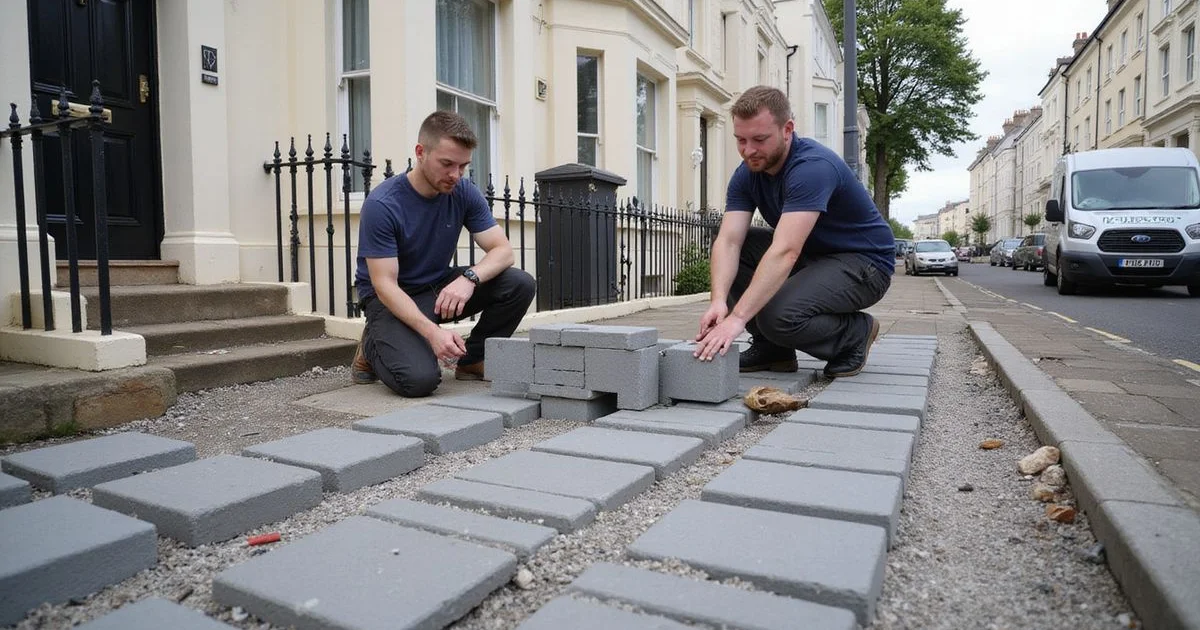
Block paving is one of the most common driveway and patio surfaces in Cheltenham, and it’s also one where the difference between a job that lasts fifteen-plus years and one that fails within three comes down to details you can’t see once it’s finished. Knowing what a properly laid job looks like, and what corners get cut, is worth ten minutes before you sign off on a quote.
What happens on site
A block paving installation follows a fairly fixed sequence: excavation of the area, a compacted sub-base of crushed stone (usually MOT Type 1), a sand bedding layer, laying the blocks in the chosen pattern, cutting edge pieces to fit, compacting the finished surface, then brushing kiln-dried sand into the joints to lock everything in place. Edge restraints, kerbs, edgings, or concrete haunching, go in either before or during laying to stop blocks creeping outward under load.
Most residential driveways take three to five days from start to finish. Expect noise from cutting equipment and plate compactors, and some disruption to vehicle access throughout. This sequence mirrors what happens on a driveway installation more generally, just with block units instead of tarmac or resin.
The sub-base is the part that matters most
Ask what depth of sub-base is planned before work starts, since a shallow or poorly compacted base is the single most common reason block paving fails early: sinking, rocking blocks, or water pooling within a couple of years instead of the fifteen to twenty-five years a properly built job should last. Once the blocks are down, this is the one part of the job you can no longer inspect, so it’s worth asking to see the compacted stone before the sand bed and blocks go on top, or at least getting the depth confirmed in writing.
| What to check | Good sign | Warning sign |
|---|---|---|
| Sub-base | Contractor states depth and material in writing | Vague answer or no mention of sub-base at all |
| Joints | Tight, even, no gaps between blocks | Wide or uneven joints, blocks that rock underfoot |
| Edges | Firm, properly restrained with kerbs or haunching | Loose edges, blocks already creeping outward |
| Fall (slope) | Slight, consistent slope away from the house | Flat surface or water pooling after rain |
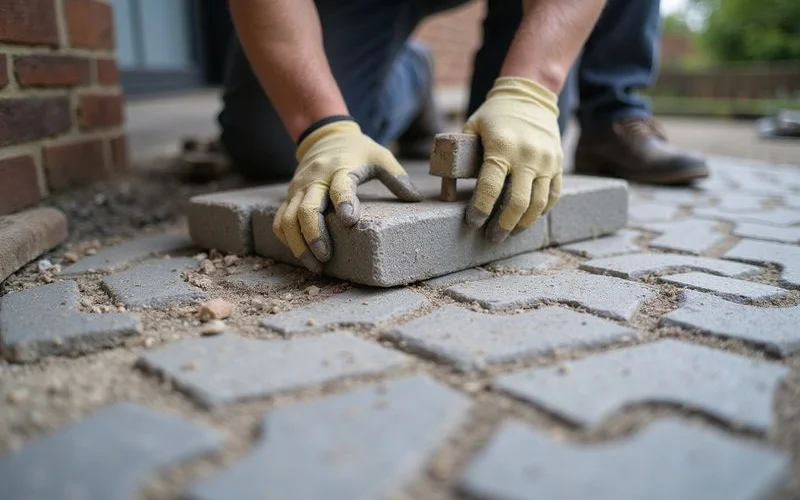
| Pattern | Herringbone or basketweave laid consistently | Sloppy alignment, visible gaps in the pattern |
Pattern choice affects more than looks
The herringbone pattern, where blocks are laid at an angle in an interlocking zigzag, is the usual choice for driveways because the geometry spreads a vehicle’s weight across multiple blocks rather than concentrating it on one. Simpler patterns like stretcher bond are quicker to lay and fine for lighter-use areas like paths, but herringbone is generally worth asking for on anything carrying regular vehicle weight.
Two things that look like problems but usually aren’t
New block paving sometimes develops a white, chalky film in the first few months. That’s efflorescence, mineral salts drawn to the surface as moisture in the new blocks evaporates. It’s purely cosmetic, doesn’t weaken the paving, and normally fades on its own within six to twelve months without needing a specialist cleaner.
Joint sand also settles and needs occasional topping up over the years as weather and traffic wear it down. That’s routine maintenance, not a sign of a failing installation, though it’s worth doing promptly since gaps in joint sand let weeds establish and water get underneath.
What a good finished job looks like
Run your hand along the surface: blocks should sit flush with no rocking, joints should be tight and consistent, and edges should feel firm rather than loose. Check for a slight fall away from the house so rainwater has somewhere to go rather than pooling by your front door. If you’re unsure what you’re looking at, most reputable contractors are happy to walk you through the finished job and explain what they did at each stage.
Our block paving page lists Cheltenham contractors ranked on workmanship, reliability, and how consistently they deliver a job that holds up. Our methodology explains exactly how those scores are built, and the homepage has the full directory if you’re comparing across paving types.
FAQ
- How can I tell if the sub-base is deep enough once the job is finished?
- You mostly can't, which is exactly why it matters to ask before it's covered. Ask your contractor to show you the depth of compacted stone before the sand bed and blocks go down, or at least ask them to state the depth in writing on the quote.
- Why do some new block paving driveways develop a white, chalky look?
- That's efflorescence, a cosmetic mineral deposit that appears as moisture in the new blocks evaporates. It's harmless, doesn't affect strength, and normally fades within six to twelve months on its own.
- Is herringbone pattern actually stronger, or just decorative?
- Both. The angled, interlocking layout spreads the weight of a vehicle across more blocks than a straight running pattern, which is why it's the usual choice for driveways rather than just a stylistic preference.
- How soon can I drive on a new block paved driveway?
- Usually straight away, since the blocks are mechanically compacted into place rather than needing to cure like tarmac or resin. Your contractor should confirm this, particularly if kiln-dried sand jointing is still settling into the gaps.