What changes the price of a new patio
By Janice · Updated 2026-06-24
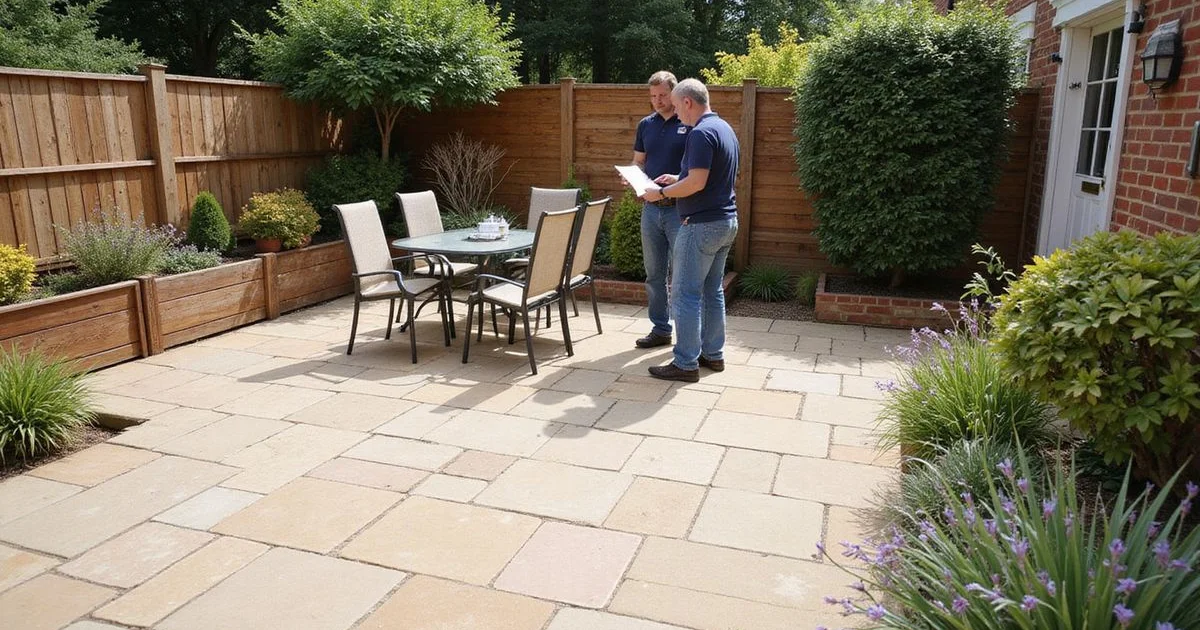
Patio quotes in Cheltenham can vary by a couple of thousand pounds for what looks, on the surface, like the same size job. The material you pick is part of the story, but ground condition and what’s involved in preparing the site usually explain more of the gap than people expect.
The main cost drivers
Material sets the starting point. Concrete flags sit at the lower end, Indian sandstone and reconstituted stone in the middle, and premium natural stone like Yorkstone or porcelain toward the top. Porcelain costs more partly because of the material itself and partly because it’s less forgiving to lay than natural stone, needing precise levels and joint widths.
Ground condition is the factor people underestimate. A level site that just needs clearing costs meaningfully less to prepare than a sloped garden, one with an old patio or concrete slab to break out first, or ground that needs excavating to get the levels right against the house. This is often a bigger swing in the final price than swapping one paving material for another.
Size and shape matter too, though not always in the direction people assume: a small, awkward patio with lots of cutting around a building line or steps can cost more per square metre than a larger, simple rectangle, because labour time doesn’t scale down as fast as area does.
A rough sense of scale
| Patio size | Concrete flags or reconstituted stone | Indian sandstone | Porcelain or premium stone |
|---|---|---|---|
| Small (10-15 m²) | Lower end | Mid | Upper end |
| Standard (20-25 m²) | Low-mid | Mid-upper | Upper |
| Large (30 m²+) | Mid | Upper | Highest |
These are rough bands based on typical Cheltenham jobs; ground condition, access, and whether an old surface needs removing first will move any of them up or down.
Where a cheap quote usually cuts corners
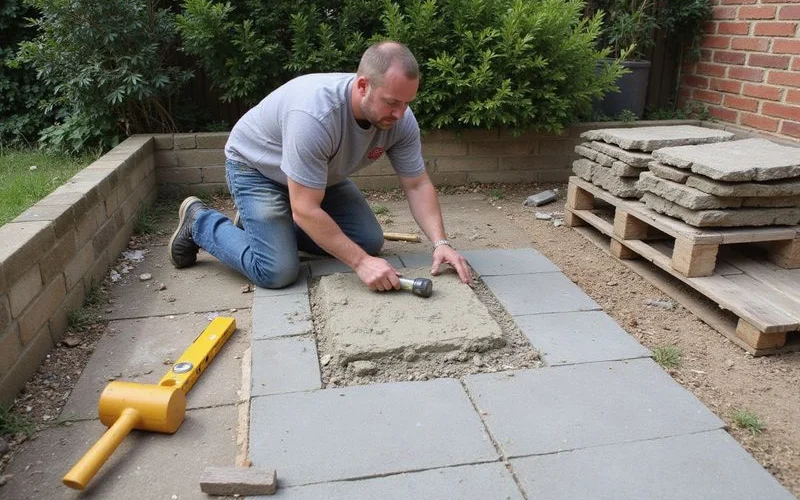
The sub-base is the part of a patio job you can’t see once it’s finished, which makes it the easiest place for a lower quote to skimp. A patio built on 75-100mm of properly compacted stone will outlast one on a shallow or badly compacted base by years, even if both look identical on the day they’re finished. Reviewers across Cheltenham consistently report that patios which start sinking, cracking, or holding water within two to five years trace back to inadequate base preparation, not the paving material chosen.
Before accepting a quote, ask what sub-base depth is planned, whether the price includes removing an existing patio or just paving over it, and whether falls (the slight slope that sheds rainwater) have been calculated in. A patio laid flat, or with the wrong fall, will pool water from the first heavy rain, and that’s a problem you can’t easily fix without lifting the paving.
Repair versus full replacement
If your existing patio has a handful of loose or sunken slabs rather than widespread failure, repair and re-laying is usually cheaper than a full new installation, since it works with the existing base rather than excavating it out. The dividing line is whether the base itself has failed: if water is pooling across several areas or the surface flexes underfoot in multiple spots, a contractor will likely recommend a rebuild rather than a patch, because relaying slabs onto a failed base just delays the same problem.
It’s worth being upfront with a contractor about which of these two jobs you think you need, since repair and full replacement are priced and planned very differently. A contractor who quotes a repair price over the phone, without seeing the site, can end up finding the base has failed once work starts, which turns a small job into a much bigger one partway through. Asking for a short site visit before committing avoids that surprise. If you’re also weighing whether to tackle any of this yourself, our DIY vs professional patio guide covers where a competent DIYer can save money and where it’s not worth the risk.
Getting quotes you can actually compare
Ask each contractor for a written quote broken down by area, material, sub-base depth, and whether disposal of old paving or spoil is included. Two quotes that look close on the total but differ on what’s included aren’t really comparable, and the cheaper one often turns out to be missing something once the site visit happens. Our patio installation page lists Cheltenham contractors ranked on workmanship and reliability, and our methodology sets out exactly how that scoring works. You can browse the full directory if you want to compare across every paving category.
FAQ
- How much does a typical patio cost in Cheltenham?
- A standard 20-25 square metre patio in concrete flags or Indian sandstone typically runs a few thousand pounds including labour, sub-base and pointing. Porcelain or premium natural stone like Yorkstone costs noticeably more for the same area, and prices rise further if excavation, retaining walls or drainage work is needed.
- Why do two patios of the same size get such different quotes?
- Ground condition is a big factor. A level, easy-to-clear site costs less to prepare than a sloped garden or one needing excavation, and that difference in groundwork can matter more to the final price than the paving material itself.
- Is it cheaper to repair an existing patio than replace it?
- Generally yes, since repair reuses the existing base rather than needing full excavation and new sub-base material. It's only cheaper if the underlying base is actually sound, which is why a contractor will usually want to inspect before confirming.
- Does the shape of the patio affect cost?
- A simple rectangle costs less per square metre than a patio with curves, steps, or lots of cutting around a building line, since irregular shapes mean more time spent cutting slabs to fit.