Is natural stone worth the extra cost for a patio or driveway
By Janice · Updated 2026-06-21
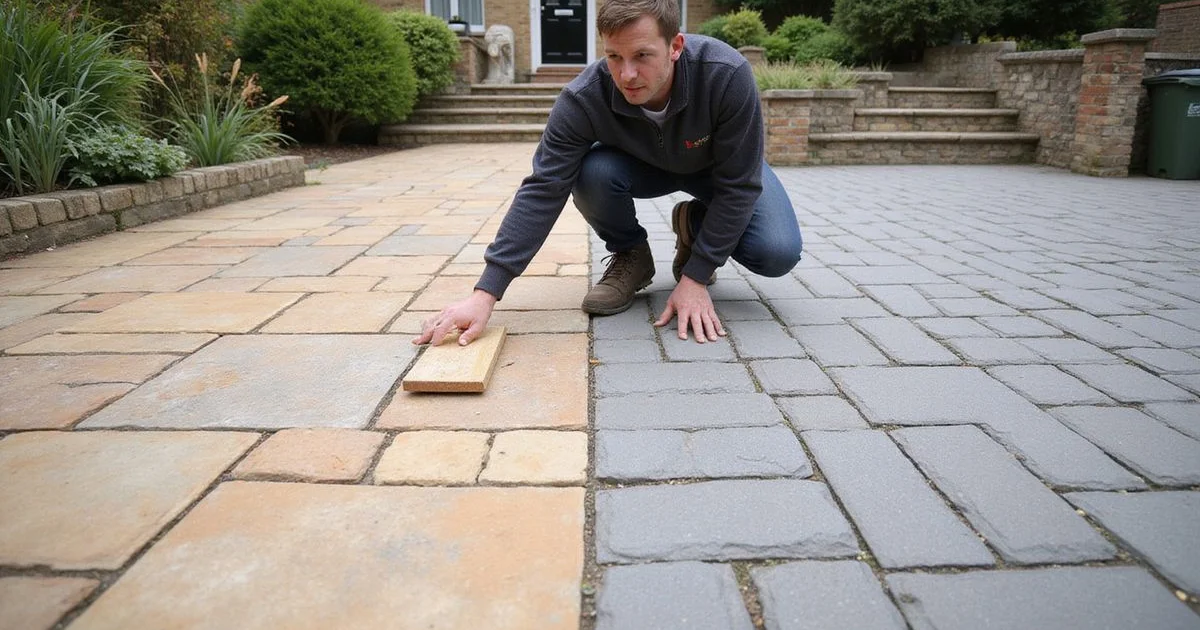
Cheltenham’s mix of Regency terraces and Cotswold-edge properties means a lot of homeowners weighing up paving options end up asking the same question: is natural stone actually worth what it costs over block paving, resin, or tarmac? The honest answer depends on what you’re optimising for, price, appearance, or how much upkeep you’re willing to do.
The headline cost difference
Natural stone, whether that’s Indian sandstone, Yorkstone or another quarried material, generally costs more than block paving or tarmac for two reasons: the material itself is pricier per square metre, and laying it properly takes longer. A riven finish (naturally split) stone in particular needs careful joint spacing since no two pieces are quite the same shape, which is skilled, time-consuming work compared to laying uniform concrete blocks in a repeating pattern.
| Material | Relative cost | Best suited to |
|---|---|---|
| Tarmac | Lowest | Driveways prioritising a plain, functional surface |
| Gravel | Low | Budget driveways, informal paths |
| Block paving | Mid | Driveways and patios wanting a defined pattern |
| Reconstituted stone | Mid to upper | Patios wanting a stone look at a lower price than quarried stone |
| Natural stone (sandstone, Yorkstone) | Highest | Patios and period properties where appearance matters most |
Resin bound surfacing tends to sit close to natural stone in price, particularly if the existing base needs full replacement rather than a resurface, so it’s worth comparing the two directly if you’re choosing between them for a driveway.
What you get for the extra money
The case for natural stone isn’t just appearance. Each slab varies slightly in colour and texture, which reconstituted or concrete alternatives can’t fully replicate, and that variation is exactly what a lot of period Cheltenham properties are trying to match. Stone also handles heavy use well: a properly laid natural stone patio should last decades structurally, with the main maintenance being periodic re-pointing and occasional cleaning to keep moss and algae down in shaded, damp corners of a garden.
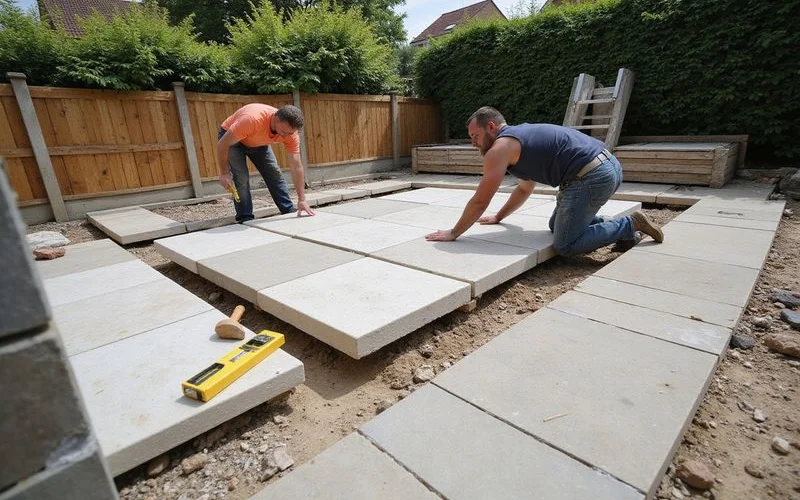
Block paving, by comparison, is cheaper to lay and just as durable structurally when the sub-base is right, but it looks more uniform and modular rather than varied. For a lot of driveways, where the surface takes daily wear from vehicles and appearance matters less than durability and cost, block paving or tarmac is the more sensible choice. For a patio you’ll be sitting next to and looking at from the kitchen window, the case for spending more on stone gets stronger. If a patio is where you’re weighing this trade-off, our patio installation cost guide breaks down the other big price factors beyond material.
Where the cost actually goes
Don’t assume the price difference is purely the stone itself. Ask any quote to break down:
- Sub-base preparation, which is roughly the same cost regardless of the final surface, since it’s driven by area and ground condition, not material.
- Material cost per square metre, where the real gap between stone and block paving shows up.
- Laying time, which is where riven stone costs more in labour than uniform block, since each piece needs individual placement and joint checking.
- Pointing or jointing, since stone patios are usually pointed with mortar or a flexible jointing compound, an extra step block paving (finished with brushed-in sand) doesn’t need.
A quote that lumps all of this into one number makes it hard to see where you’re actually paying more, so ask for it itemised if you’re comparing stone against a cheaper alternative.
Making the call
If budget is the main constraint, reconstituted stone or good quality block paving gets you most of the visual benefit of natural stone at a lower price, and either holds up well with proper groundwork. If you’re set on the character of genuine quarried stone, particularly for a period property where matching existing stonework matters, the extra cost buys something block paving genuinely can’t replicate. Our methodology explains how we score the contractors who work with both materials, and our natural stone and flagstone paving page lists Cheltenham specialists if you want quotes to compare directly against block paving prices. You can also browse the full list of paving contractors we’ve scored across every category.
FAQ
- Is natural stone always more expensive than block paving?
- Usually yes, both in materials and labour, since stone like Indian sandstone or Yorkstone costs more per square metre than concrete block and takes longer to lay well, particularly with riven or hand-cut edges. Reconstituted stone narrows the gap but still generally sits above standard concrete block.
- Does natural stone last longer than block paving?
- The stone itself can last decades either way if the base is done properly. What differs is maintenance: natural stone often needs periodic sealing and occasional re-pointing, where block paving mainly needs joint sand topping up and the odd block swapped out.
- What's the cheapest option that still looks good?
- Reconstituted flagstones or concrete flags generally give a similar look to natural stone at a lower price, though they lack the colour variation of quarried stone. Tarmac and resin sit at different price points again depending on whether you want a plain functional surface or a decorative one.
- Can I mix materials, like a stone patio with a resin driveway?
- Yes, plenty of Cheltenham properties do exactly this, choosing stone for a patio where appearance matters most and a cheaper, more practical material like resin or tarmac for the driveway. There's no requirement to match the two.